Traveling to Antwerp for the First Time: A Practical Planning Guide
Antwerp catches people off guard. You might arrive expecting a pleasant Belgian city and leave genuinely stunned by the medieval cathedral towering over a bustling square, the glittering diamond trade happening on quiet side streets, and a waterfront museum that redefines what a museum can feel like. First-time visitors often say the same thing: they did not give Antwerp enough days. This guide helps you fix that before you even pack your bag.
First-Timer’s Checklist for Antwerp
- Most Western passport holders enter Belgium visa-free under the Schengen agreement for up to 90 days
- Sorting out data connectivity before departure saves stress from the moment you land
- The Cathedral of Our Lady, the MAS museum, and the Grote Markt are your non-negotiable first stops
- The Diamond Quarter sits just a short walk from Antwerp-Centraal and takes a couple of hours to take in properly
- A Lijn transport card covers trams and buses across the city, saving both money and hassle
Who Can Enter Belgium Without a Visa
Belgium sits inside the Schengen Area, which means citizens of many countries can visit for tourism without applying for a visa in advance. If you hold a passport from the United States, Canada, Australia, the United Kingdom, or most of South America, you can enter and stay up to 90 days within any 180-day period.
Rules vary by nationality and do get updated. Before booking flights, always verify your country’s current entry status through the official Schengen border policy published by the European Commission. It is the most accurate and authoritative source available.
Once you land at Brussels Airport, getting to Antwerp is genuinely easy. Direct trains from Brussels-Centraal reach Antwerp-Centraal in about 40 minutes. The station itself is worth pausing for. Its vaulted ceilings and ornate stonework make it one of the most beautiful train stations in Europe, and arriving through its grand facade sets the right tone for the city.
Staying Connected from the Moment You Arrive
One of the most underrated parts of travel prep is sorting out your phone before you leave home. Landing in a foreign city with no data and no idea how to reach your hotel is entirely avoidable stress.
Belgian carriers sell SIM cards at the airport and in city shops, but queues can be long and the options confusing if you do not speak Dutch or French. A smarter move for many travelers is arranging a data plan before departure. If your phone supports it, reading up on what is eSIM technology is a genuinely useful step, particularly for those who have never used a digital SIM. An eSIM lets you activate a local or regional data plan remotely, without swapping physical cards. You arrive with data already running and maps already loaded.
Antwerp’s city center has solid 4G coverage and growing 5G availability. Most hotels, cafes, and major museums offer free Wi-Fi, but you will want your own connection for navigating between sites and looking up restaurant reviews on the move.
The Cathedral of Our Lady: Where Antwerp’s History Lives
There is no better place to begin your Antwerp visit than the Cathedral of Our Lady (Onze-Lieve-Vrouwekathedraal). Its spire dominates the Grote Markt skyline and has done so since the sixteenth century. Inside, you will find four paintings by Peter Paul Rubens, including “The Descent from the Cross,” which hangs in its original commissioned location. That alone makes it one of the most significant church interiors in Northern Europe.
Entry costs a small fee and is absolutely worth paying. Plan at least an hour inside. The building is enormous, the light through the Gothic windows shifts throughout the day, and the Rubens paintings reward slow, careful looking rather than a rushed pass-through.
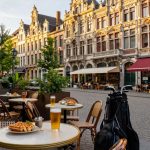
Right outside, the Grote Markt buzzes with outdoor dining and locals going about their day. The sixteenth-century guildhalls lining the square are handsome backdrops for a mid-afternoon coffee. The famous Brabo fountain at the center tells the legend of how Antwerp got its name. Spend a few minutes with it before moving on.
The Diamond Quarter: A Global Trade Hub on Antwerp’s Streets
Antwerp controls roughly 80 percent of the world’s rough diamond trade. That fact becomes genuinely striking once you see how compact the Diamond Quarter actually is. It spreads across a handful of streets around the Diamantbuurt neighborhood, just a short walk from Antwerp-Centraal station.
You will see small storefronts with security glass, dealers examining stones under a loupe, and trading offices packed into modest-looking buildings. The industry here is centuries old and still very much alive on any given weekday morning.
The DIVA museum on Suikerrui street offers the best structured introduction to the trade. Its exhibits cover the full history of Antwerp’s diamond industry alongside displays of extraordinary historical jewelry. The museum is compact, well-designed, and does not overwhelm. Budget around 90 minutes for a comfortable visit.
- The DIVA museum for the full diamond history and jewelry context
- Open storefronts on Hoveniersstraat where active trading happens in plain sight
- The Antwerp Diamond Bourse building, which has stood since 1893
- The long-established Orthodox Jewish community around Pelikaanstraat, a key part of diamond trade culture for generations
MAS Museum and the Reinvented Waterfront
The Museum aan de Stroom, known universally as MAS, is one of those buildings that signals a city taking itself seriously. It rises ten stories beside the River Scheldt in the old harbor district, its red sandstone and curved glass panels stacking upward in a shape that is both striking and oddly inviting.
Inside, the permanent collection covers Antwerp’s history as a global port city, with objects from around the world that passed through or were brought back by traders across the centuries. The top-floor rooftop terrace is free to visit and gives you a panoramic view across the Scheldt and back over the city rooftops. Timing it for sunset is worth the planning effort.
The waterfront area surrounding MAS has transformed significantly in recent years. The Eilandje district around the museum has become a hub for weekend markets, outdoor dining, and creative businesses operating out of repurposed warehouse buildings. It carries a relaxed, slightly industrial character that contrasts pleasantly with the formal grandeur of the city center.
Getting Around, Eating Well, and Pacing Yourself
Antwerp’s core sights are walkable if your legs are willing. From Antwerp-Centraal to the Cathedral is about 15 minutes on foot. From the Cathedral to MAS is another 20. The Diamond Quarter sits just north of the station. You can cover the main circuit in two full days, though three gives you breathing room to linger in the places that genuinely grab you and get properly lost down side streets.
The tram network handles the gaps efficiently. A Lijn card loaded with credit works across trams and buses throughout the city. You tap in and out at the reader with no need to carry change or buy single tickets each time.
Eating in Antwerp means good options at almost every corner. A few things worth prioritizing:
- Flemish beef stew (stoofvlees) slow-cooked in beer, served with fries at a traditional brasserie
- Antwerp hands (Antwerpse handjes), a local chocolate or marzipan confection tied directly to the city’s founding legend
- Jenever (Belgian gin) at one of the old brown cafes near the Grote Markt
- Moules-frites (mussels and fries) as a Belgian staple available almost everywhere and rarely disappointing
The area around the Nationalestraat is where Antwerp’s fashion reputation lives. The city produced the Antwerp Six, a group of fashion designers who graduated together in the 1980s and reshaped the direction of European style. Even if shopping is not on your agenda, the boutiques and concept stores make for absorbing window-browsing.
How Many Days You Actually Need
Two full days covers the essentials comfortably: the Cathedral, Grote Markt, Diamond Quarter, MAS, and the Eilandje waterfront. Three days lets you add a proper wander through the Fashion District, time on the Meir shopping street, and a slower afternoon in the quieter residential neighborhood of Zuid.
Antwerp also works well as a base for day trips. Bruges is about 70 minutes by train. Ghent is 50 minutes. Brussels is 40 minutes. If you want to see multiple Belgian cities without switching hotels every other night, Antwerp makes a very practical central base.
The City That Earns a Second Trip
Antwerp does not perform for tourists in a showy way. It simply exists, confidently, as a place where medieval history, a living diamond trade, and a world-class waterfront museum all occupy the same few square kilometers without any of it feeling forced or curated for visitors.
Sort your logistics early. Confirm your entry requirements, arrange your data connection before you fly, and sketch out your first two days loosely before arrival. Then leave gaps. Some of the best Antwerp moments come from turning down an unplanned street and finding a courtyard cafe you had no intention of visiting.
The city has been welcoming travelers for centuries. It is very good at it. Your first trip will not be your last.