Antwerp has a way of getting inside you. The city is ancient, compact, and alive with character. But it is the food that leaves the deepest mark. Mussels steaming in white wine. Thick waffles with pearl sugar baked into the batter. Dark ale simmering in a pot of slow-cooked beef. Visitors come for the architecture and the Rubens paintings, but they leave thinking about dinner. And long after the flight home, they find themselves standing in their kitchen, trying to recreate something they ate on a cobbled street in Belgium.
That is the real power of Antwerp’s food scene. It does not just feed you. It teaches you something.
Flemish Kitchen Notes
- Antwerp’s food culture is built on bold flavors, quality ingredients, and unhurried cooking
- Dishes like stoofvlees, moules-frites, and speculoos are fully achievable in a home kitchen
- The Antwerp Tourist Guide is the definitive resource for understanding which restaurants and traditions shape the city
- With the right tools, visitors can find and recreate Flemish-inspired meals anywhere in the world
The Culinary Roots That Define Antwerp’s Kitchen
Antwerp sits at the heart of the Flemish region of Belgium. Flemish cooking has its own identity, distinct from the French-influenced cuisine of Wallonia to the south. It is hearty, rooted in local produce, and built around techniques that reward patience above everything else.
The classics are not complicated. But they are uncompromising about quality. Stoofvlees, the Flemish beef stew, requires nothing more than beef chuck, dark Belgian ale, onions, herbs, and time. But get those things right and you have something extraordinary. The same logic applies to moules-frites. Two ingredients, one pot, one technique. But the execution, the timing, and the freshness of the mussels make all the difference between good and unforgettable.
Then there is speculoos. This spiced shortbread biscuit is inseparable from Belgian identity. In Antwerp, you encounter it at every corner bakery, in coffee shops, and ground into sauces for game dishes. The spice blend of cinnamon, cardamom, white pepper, ginger, cloves, and nutmeg is not a secret, but the balance between them is an art form.
For anyone serious about eating their way through Antwerp, the Antwerp Tourist Guide is the most reliable resource for understanding which food traditions and restaurants actually shape the city’s culinary landscape. It connects the dots between what you ate and where it came from.
What Happens to Visitors After They Eat in Antwerp
Something shifts in people who eat well in Antwerp. The city has a culture of intention around food that is hard to explain until you experience it firsthand. Restaurants commit to fewer dishes done with full attention. Market stalls offer seasonal produce, not year-round imports. Chocolatiers treat tempering and ganache as genuine crafts, not production processes.
This intentionality rubs off. Visitors go home and start asking different questions in the kitchen. Not just “what am I making for dinner?” but “where did this ingredient come from?” and “what is the right technique here?” That is a meaningful shift. And Antwerp’s food culture consistently triggers it.
The Dishes That Send People Back to the Kitchen
After a trip to Antwerp, certain dishes dominate home cooking experiments. They are the ones that made the biggest impression at the table and that feel possible to attempt without professional training or specialist equipment.
Here are the seven Flemish dishes that most commonly inspire home cooks after a visit to Antwerp:
- Stoofvlees (Flemish Beef Stew) — braised in dark Belgian ale with thyme, bay leaf, and mustard bread dissolved into the sauce
- Moules-Frites — fresh mussels steamed in white wine and shallots, served alongside hand-cut fries
- Carbonnade Flamande — a sweeter variation of stoofvlees using brown sugar and Dijon mustard spread on bread
- Speculoos — spiced shortcrust biscuits baked for crunch, warmth, and that distinctive layered spice profile
- Waterzooi — a creamy Flemish stew made with chicken or fish and root vegetables in a rich, herb-scented broth
- Liege Waffles — thick, yeasted waffles with pearl sugar caramelized directly into the batter during cooking
- Chicon au Gratin — Belgian endive wrapped in ham and baked under a thick, golden bechamel sauce
Each dish is genuinely manageable at home. None require specialist equipment. All of them reward a bit of practice and an honest respect for the process.
Bringing Flemish Main Courses into Your Home Kitchen
Flemish main courses are designed for home cooking. They use affordable cuts of meat, widely available vegetables, and techniques that are straightforward to learn. The only things they demand are time and a willingness to follow the process without rushing.
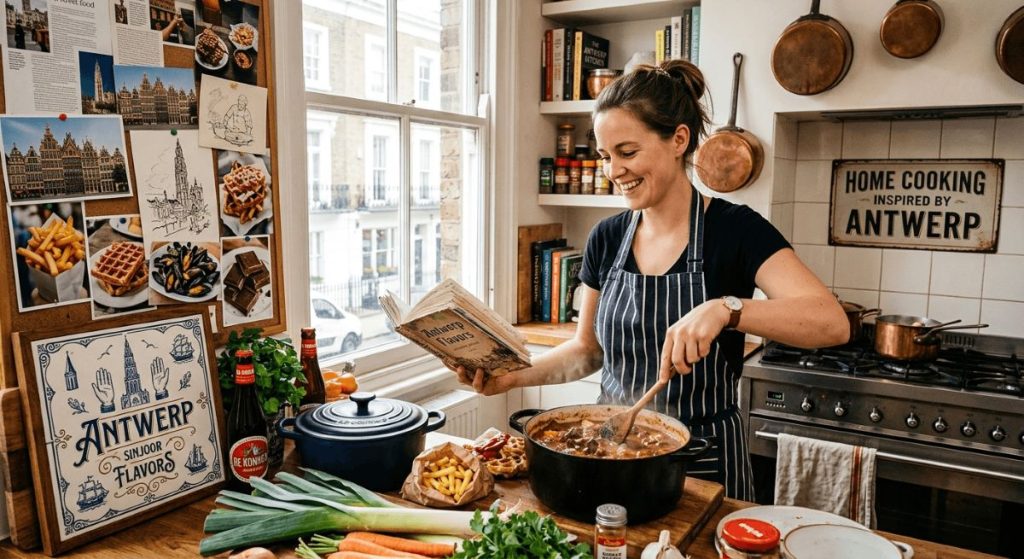
Stoofvlees is the dish most home cooks attempt first. The method is accessible: brown beef chuck in butter, add onions and cook until soft, pour in dark Belgian ale, add a bouquet garni and a slice of bread spread with mustard. Seal the pot and braise for two to three hours. The mustard bread dissolves into the sauce and thickens it naturally. The result is rich, slightly bitter from the ale, and deeply satisfying.
Waterzooi is a lighter starting point and an excellent entry for anyone new to Flemish cooking. It is a broth-based stew with leeks, carrots, celery root, and cream. Chicken thighs or firm white fish both work brilliantly. It is elegant without being difficult.
For those ready to push beyond these two and build a fuller Flemish repertoire, there is a wide range of main course inspiration available through dedicated recipe platforms. The variety of ideas helps home cooks move from basic stews into more complex territory without feeling lost.
Adapting Flemish Dishes with What You Have at Home
| Dish | Key Ingredient | Home Substitute | Core Technique |
|---|---|---|---|
| Stoofvlees | Belgian dark ale | Leffe Brune, Chimay, or Guinness | Low and slow braise |
| Moules-Frites | North Sea mussels | Any fresh live mussels | Steam in aromatics |
| Waterzooi | River fish or free-range chicken | Chicken thighs or cod fillets | Gentle poaching in broth |
| Speculoos | Speculoos spice blend | Cinnamon, cardamom, cloves, white pepper | Short-bake shortcrust |
| Chicon au Gratin | Belgian endive | Endive or radicchio | Oven braise under bechamel |
Finding Antwerp-Style Dining in Your Own City
Not every craving can wait for a flight back to Belgium. Sometimes you want someone else to cook the mussels. That is a completely reasonable position to take.
Cities with strong culinary scenes often have at least one restaurant serving Belgian-style fare. European brasseries, French-Belgian hybrid menus, and craft beer bars with serious kitchens tend to be the best places to look. The challenge is knowing where to start in an unfamiliar city or even in your own.
Pulling up a restaurant finder takes a lot of the guesswork out of this process. You can filter by cuisine type and location, which is genuinely useful when searching for something as specific as Flemish-style cooking among hundreds of results.
If the search comes up empty, it is a prompt to cook it yourself. Honestly, that outcome tends to produce more satisfaction anyway.
The Sweet Science of Belgian Chocolate and Speculoos at Home
Belgian chocolate from Antwerp is not hype. The city has a tradition of high-quality chocolate making that predates the modern artisan food movement by centuries. Eating a properly made praline from an Antwerp chocolatier recalibrates your expectations in a permanent way.
At home, this translates into a different relationship with chocolate entirely:
- Choosing high-cacao dark chocolate instead of compound chocolate for baking and sauces
- Learning basic tempering technique to achieve a clean snap and glossy finish on dipped chocolates
- Making ganache from scratch with good cream and real chocolate rather than reaching for a packet
- Using chocolate as a savory ingredient in braises and reductions, not just as a dessert component
Speculoos baking follows a similar path. Once you have tasted the real thing in an Antwerp bakery, commercially produced versions taste flat. Making them at home with a properly balanced spice blend produces something far closer to what you remember from Belgium.
“I went to Antwerp for a weekend. I came home and spent three months trying to perfect stoofvlees. It was genuinely the best thing that ever happened to my cooking.”
A visitor’s reflection on Antwerp’s culinary influence
Seasonal Cooking: The Lesson Antwerp’s Markets Teach
One of the quieter but most lasting lessons Antwerp gives visitors is a genuine respect for seasonal produce. The city’s markets are organized around what is fresh and local. Traditional Flemish restaurants change their menus as the season shifts. You do not find tomatoes in January or root vegetables out of context in August.
Bringing this habit home changes how you shop and cook. You stop defaulting to the same weekly ingredients and start paying attention to what is actually good right now. Cooking becomes more responsive, more creative, and far more interesting as a result.
A seasonal framework for cooking across the year:
- Spring: White asparagus, fresh herbs, river fish, green peas, and early strawberries
- Summer: Tomatoes, courgettes, stone fruits, cold salads, and light herb-forward broths
- Autumn: Wild mushrooms, endive, apples, game birds, and long-braised meats
- Winter: Root vegetables, chicory, dark ales in stews, and warming spices for baking
Core Techniques That Transfer from Flemish Cooking
Antwerp’s cuisine does not just offer recipes. It offers a set of principles that apply far beyond Belgian cooking. Once you absorb them, they change how you approach a kitchen altogether.
These are the techniques Flemish cooking teaches home cooks most effectively:
- Butter as a base: Butter is used generously in Flemish cooking and treated as a fundamental medium. It builds flavor at the start of a dish in ways that oil alone cannot replicate
- Low-and-slow braising: The slow-cooking tradition in Flemish cuisine produces results that no fast method can match. Time is genuinely the most important ingredient
- Beer in the pot: Belgian ale adds complexity to sauces and stews that wine cannot match in quite the same way. The bitterness, the malt, and the carbonation all play distinct roles in the final result
- Bread as an ingredient: In carbonnade flamande, mustard-spread bread is placed directly on top of the stew and slowly dissolves into the sauce, acting as both thickener and flavor layer
- Patience at the table: Flemish cooking teaches you to eat slowly and with attention. That is a skill that changes the entire experience of food, not just the cooking of it
What Antwerp’s Flavors Keep Giving Long After You Leave
Food in Antwerp is not casual. It is central to the city’s identity, its history, and the way its people relate to one another. Sitting down to a proper Flemish meal in a brick-vaulted brasserie is an experience that stays with you. Not because it is elaborate, but because it is honest and genuinely excellent.
The home cooks inspired by Antwerp are not trying to recreate Michelin-star food. They are chasing a feeling. The warmth of a deep beef stew on a cold evening. The satisfaction of mussels opened perfectly in a briny, herb-laced broth. The simple pleasure of a speculoos biscuit with a properly made coffee.
Antwerp’s food scene does what the best food always does. It makes you want to learn more. It makes you want to get better in the kitchen. And it makes you genuinely excited to sit down and eat.
That is a gift worth traveling for. And once you have it, you carry it into every kitchen you step into for the rest of your life.